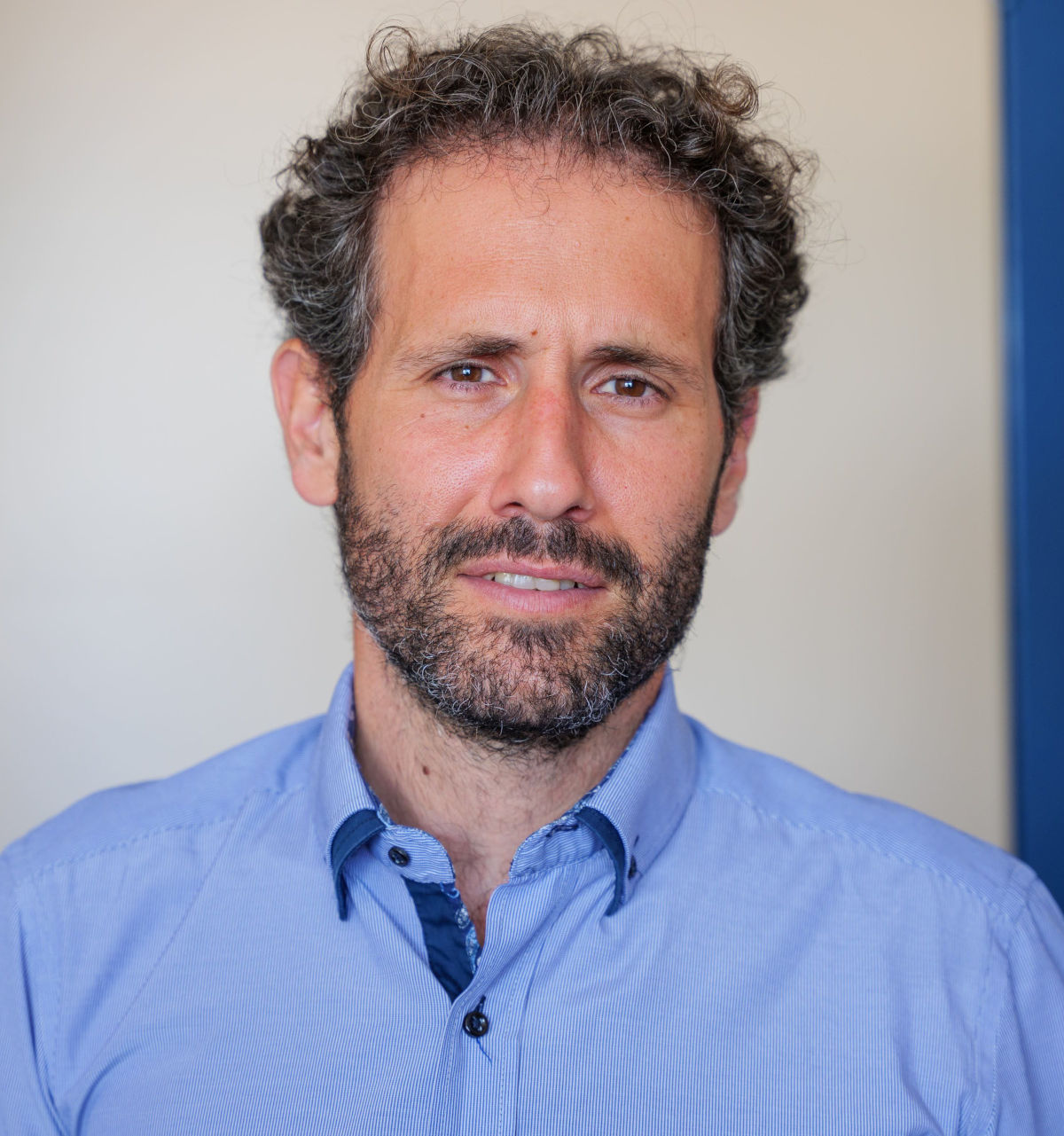
 Konstantinos Moustakas
Twinning the Physical World for Extended Reality
Konstantinos Moustakas
University of Patras
ABSTRACT
What would it take to make a true copy of the world? Not a snapshot of it, but a version that has the right shape, follows the same physical laws, and responds the way real things and real people do. Extended Reality has become remarkably good at showing us places we are not in. Its next frontier is harder and more interesting: building digital twins of objects, environments and even ourselves that we can step into, test and trust.
The difficulty is that the real world never hands us complete information. Every measurement is partial, every sensor misses something, and the world keeps changing while we observe it. Yet humans make sense of incomplete information all the time, by combining what they see with what they know about how things are built and how they behave.
This keynote explores how the same idea can guide machines. By blending learning from data with the laws of physics and the way people perceive the world, we can turn fragmented observations into living digital replicas that are not only convincing to the eye, but faithful to reality, opening the door to a new generation of immersive experiences.
SPEAKER BIOGRAPHY
Konstantinos Moustakas received the Diploma degree and the PhD in electrical and computer engineering from the Aristotle University of Thessaloniki, Greece, in 2003 and 2007 respectively. During 2007-2011 he served as a post-doctoral research fellow in the Information Technologies Institute, Centre for Research and Technology Hellas. He is currently a Professor at the Electrical and Computer Engineering Department of the University of Patras, Head of the Visualization and Virtual Reality Group, Director of the Wire Communications and Information Technology Laboratory and Director of the MSc Program on Biomedical Engineering of the University of Patras. He serves as an Academic Research Fellow for ISI/Athena research center. His main research interests include virtual, augmented and mixed reality, 3D geometry processing, haptics, virtual physiological human modeling, information visualization, physics-based simulations, computational geometry, computer vision. During the latest years, he has been the (co)author of more than 330 papers in refereed journals, edited books, and international conferences. His research work has received numerous awards. He has participated in more than 30 research and development projects funded by the EC and the Greek Secretariat of Research and Technology, while he has served as the coordinator or scientific coordinator in 4 of them. He is currently the coordinator of the Horizon Europe projects DynaCITY and XR-SENSE. He is a senior member of the IEEE, the IEEE Computer Society and member of Eurographics.
 Emanuele Frontoni
Context-Aware and Dynamic XR through Generative AI
Emanuele Frontoni
University of Macerata
ABSTRACT
The speech explores how XR can evolve from static, pre-authored applications into adaptive immersive systems driven by user needs, environmental context, and domain constraints. The lecture focuses on Human-in-the-Loop pipelines where Generative AI supports the creation of interfaces, instructions, virtual humans, 3D assets, textures, reconstructions, learning materials, and immersive experiences. Through recent case studies from our lab, participants will examine how context-aware generation, neural rendering, mixed reality capture, embodied guidance, and agentic XR learning can make immersive systems more dynamic and personalized. The session highlights the importance of human control, grounding, usability, and evaluation when AI-generated XR content is inspected, corrected, and refined by users. It concludes by discussing the transition toward Agentic XR, where AI agents can perceive, reason, remember, plan, assist, create, and act within immersive environments while remaining aligned with human goals.
SPEAKER BIOGRAPHY
Emanuele Frontoni is Full Professor of Computer Science at the University of Macerata and Co-Director of the VRAI – Vision Robotics & Artificial Intelligence Lab. He is also an affiliated researcher at the Italian Institute of Technology in Genoa and, since 2022, Scientific Director of NemoLab, the Center for Scientific Research and Technological Innovation in the Neurological Field at Niguarda Hospital in Milan. His research focuses on artificial intelligence and computer vision, with applications in robotics, video analysis, human behavior analysis, extended reality, sensitive environments, and digital humanities. He is the author of more than 300 international publications and collaborates with national and international companies on technology transfer and innovation projects. Since 2021, he has been included in the Stanford University/Elsevier “World’s Top 2% Scientists” list in the Artificial Intelligence & Image Processing category.
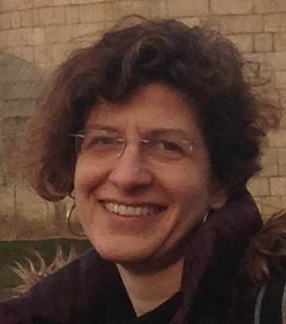 Maria Economou
From Immersion to Meaning: Evidence-Led Design of XR for Cultural Heritage
Maria Economou
University of Glasgow, UK
ABSTRACT
Extended Reality has moved quickly from novelty to infrastructure in museums and heritage sites, yet the pace of technical development continues to outstrip our evidence about what these systems actually achieve for the people who use them. This keynote argues that rigorous evaluation belongs at the centre of the design process rather than at its end. Technical decisions — the point of view a system places the visitor in, the balance between interactive agency and authored narrative, the handling of recorded testimony, whether an experience is delivered to a single user in a headset or shared with others — have consequences that cannot be read off a specification, and that become visible only when they are examined together with the curatorial, ethical and participatory choices they are bound up with.
The talk will draw on international projects spanning very different conditions: the EU Horizon 2020 EMOTIVE project on emotional digital storytelling deployed at the Antonine Wall and the Hunterian Museum, Glasgow; the Innovate UK Museums in the Metaverse programme; and Nobody’s Listening, a VR experience on the genocide against the Yazidi community, co-created with Yazidi community members and partners in Iraqi Kurdistan, where I led the evaluation strand with colleagues in Sulaimani and Athens. In each case, evaluation data complicated expectations about which configurations produce understanding, emotional engagement and recall — and in the context of difficult heritage, where the stakes include the risk of harm, it reshaped what responsible design requires. The keynote closes with the questions generative AI now presses on the field, where synthetic reconstruction and AI-mediated voices are advancing well ahead of any evidence about their effects on heritage audiences.
SPEAKER BIOGRAPHY
Maria Economou is Professor of Digital Cultural Heritage at the University of Glasgow, jointly appointed between Information Studies and The Hunterian, the university’s museum and gallery. Her research focuses on visitor studies and evaluation research: how people actually engage with digital and immersive heritage experiences, and what that evidence implies for design. She also researches the documentation and management of cultural collections, the organisation of cultural information and digitisation practice, and the effects of digital systems on the working practices of cultural organisations. She held a British Academy/Wolfson Research Professorship (2022–2026) investigating emotional engagement with museum collections through digital storytelling and participatory approaches, on which she is writing a monograph to come out in 2027. Recent projects include EMOTIVE (EC H2020, 2016-19), MSCA POEM on Participatory Memory Practices (EC H2020 Doctoral Training Network, 2018-23), Museums in the Metaverse (Innovate UK, 2023-26) and Nobody's Listening, a trauma-informed immersive project documenting Yazidi heritage in Iraqi Kurdistan (2020-). She was a member of the editorial board of the ACM Journal on Computing and Cultural Heritage (2018–2023), and serves on the editorial boards of Memory, Mind & Media, Museum Worlds: Advances in Research, and the Routledge Participatory Memory Practices book series. She is founding Co-Director of Glasgow's Digital Cultural Heritage Arts Lab and served as Vice-President of the UNIVERSEUM Board, the European Academic Heritage Network (2017–2024).